Welcome to the Third Shift Movement Shop, home of Literal Technique, where we work so we can move.
Literal Technique focuses on the bones and 12 muscles that provide a foundation for a technique that develops what I call a fusion body.
It is based on the belief that understanding the body, literally, is crucial to learning, re-learning, and repairing technique.
LITERAL TECHNIQUE:
BREAK IT DOWN & LAY IT ALL OUT
In The Central Geekdom of Dance Technique installments, we look at the fundamentals of Literal Technique – the what happens where – and this requires looking at the bones and the 12 muscles. This is the geeky part, where we break it down and lay it all out.
There are hundreds of muscles involved in the movement of the body. Literal Technique focuses on the 12 muscles that I believe are foundational for any dancer. My goal is to show you, one by one, what the bones and the 12 muscles look like; explain what happens where; and provide the technique fundamentals that move us toward a fusion body. In the process, we will learn, re-learn, or repair technique.
As the anatomists know, because it is necessary to organize complex information in order to explain it, we have to discuss the bones and muscles in a particular order. I’ve decided to start at the spinal column and work my way from there. Try not to lock this order into your brain as THE ORDER. The body is a whole and interconnected organism and has no starting point. Any organization of it is, in some sense, entirely random.
As the anatomists also know, the complexity may require us to choose a front and a back of the body. For the sake of clarity, I will follow the convention where “front” means the side of the body our eyes are on, and “back” means the side of the body we cannot see. There are quite a few instances where these distinctions are helpful. My website and the installments lay out Literal Technique for a fusion body, however, which has no front and back and is not viewed or inhabited from the outside – a three dimensional, moving body is significantly different than a body drawn on paper. So, I will dispense with front and back when I believe it will not create confusion and will further the understanding of my ideas.
The geeky part of anything always requires a glossary. There will be words that you don’t know and may have never seen before. When this happens, check the Glossary.
I’ve started a free Substack newsletter. Please subscribe!

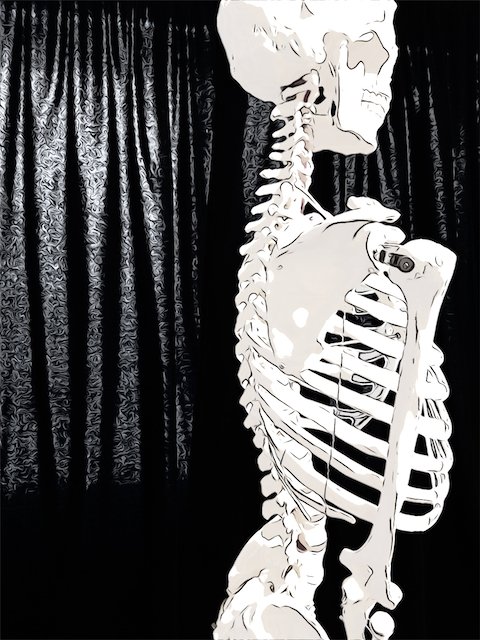
Alignment of THE SPINAL COLUMN has to be one of the more difficult aspects of dance training. We are generally taught to think of the spinal column in parts and to align it in parts. From the standpoint of technique (and reality), the spine is one structure with 33 vertebrae that move jointly but differently.
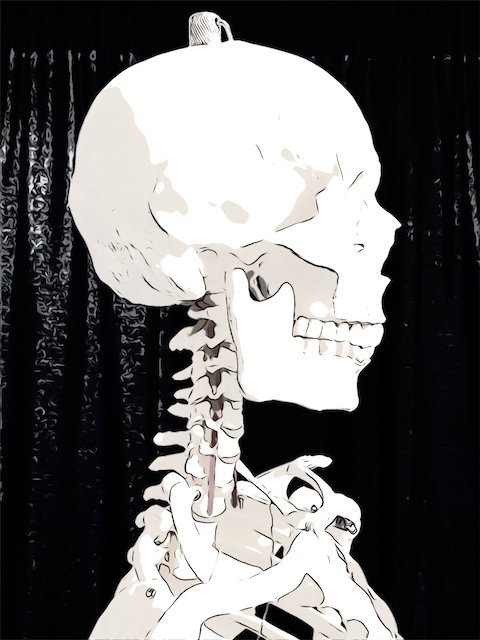
Movement of THE SKULL happens at its spinal column connection. Alignment of the skull will have an impact on the alignment of the cervical vertebrae and, since the spinal column is one structure, it will impact alignment of the spinal column as a whole. Our first step toward learning to move a fusion body is learning to move the skull as part of the spinal column.

Existing technique splits THE RIB CAGE into two halves – the rib cage in “front” and the rib cage in “back.” The rib cage, however, is a 360° structure – a barrel. In Literal Technique, our starting point for the rib cage is its connection to the thoracic vertebrae. Ultimately, any question about alignment of the rib cage always becomes one about stabilization and movement of the spinal column.
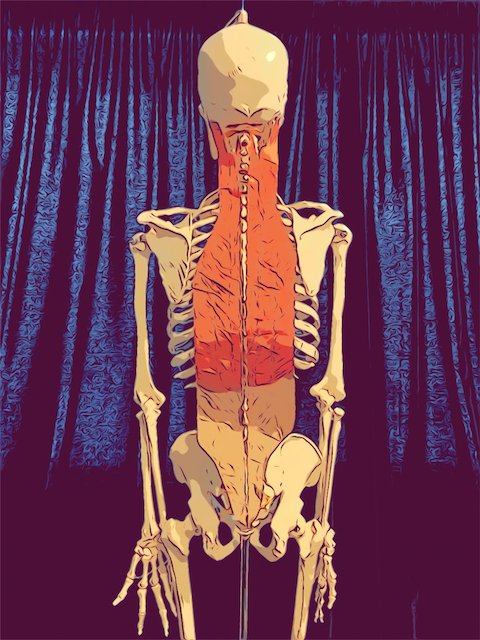
THE ERECTOR SPINAE give us a straightforward example of what simultaneously different muscle effort means. As the introduction of the first muscle in our group of 12, they also launch the discussion about how to use muscle to stabilize and move bone, which is central to learning Literal Technique.

The bones we use for the MOVEMENT OF THE ARM add a layer of complexity to finding alignment and at rest. Movement of the arm involves four bones that are connected to each other but are almost entirely independent of the larger skeleton, making their alignment and at rest more difficult to understand and accomplish. Grasping the movement of the arm will help us take our fifth step toward a fusion body.
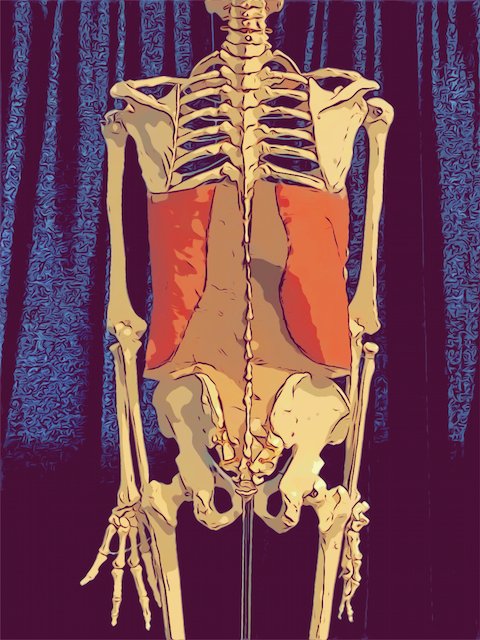
The complexity of the technique of movement of the arm can leave many dancers confused and with bad habits that disrupt overall alignment. As a foundational muscle, THE LATISSIMI DORSI provide a technical fundamental for arm movement that can help dancers begin to learn, re-learn or repair this technique.
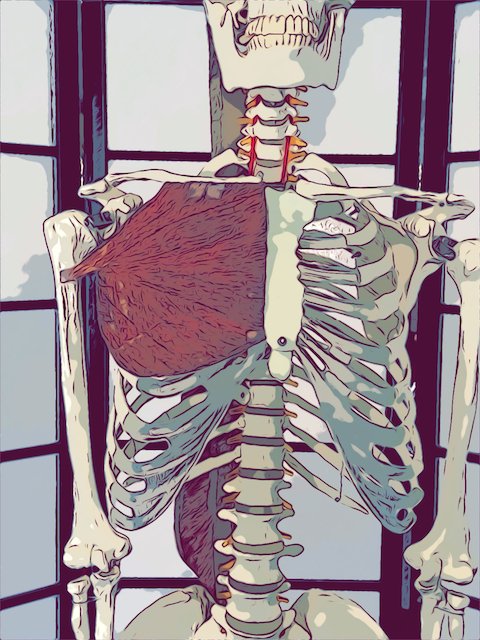
When we add THE PECTORALIS MAJORS, we not only add to the technique of movement of the arm, but we start to see the Erector Spinae, the Lats, and the Pec Majors’ relationship to the abdominal muscles. This further connects the arms to the rib cage but now concretely connects them to the pelvis. The 360° muscle stabilizes and moves the spinal column, the rib cage, the arm bones, and the pelvis.
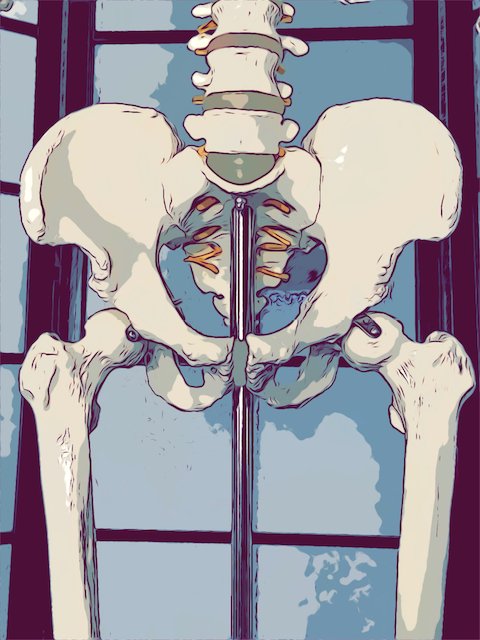
It is very easy to think of THE PELVIS as the starting point for many of our alignment problems. Dance technique can seem to originate from the pelvis and almost nowhere else. Learning about the pelvis, however, teaches us that, once again, the spinal column is where movement begins.
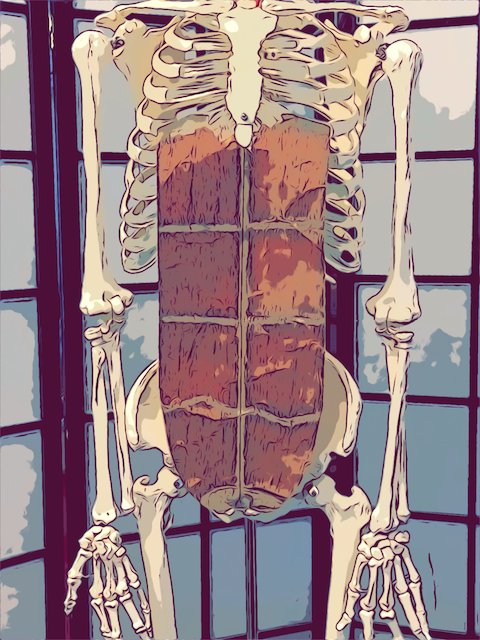
THE FOUR ABDOMINALS can be tricky – they generally work, whether we think about them or not, especially when we are young and strong. But, if we are not properly and actively using them when we dance, are they increasing or decreasing our technical ability? What muscle habit do you have when you use the abdominals to balance? What muscle habits do you have when you start moving?
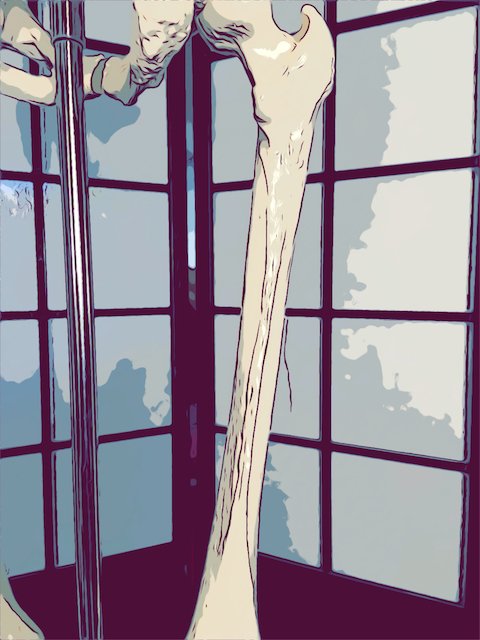
Dancers know that THE FEMUR (also called the thigh bone) is the basis for various movements that incorporate some form of coupé, passé, attitude, leg extension, and plié. It helps us walk, run, jump, and move in and out of the floor. Dance technique tends to focus on the hip joint, which, by default, singles out the head of the femur. Literal Technique says that we need to train to dance the entire femur.
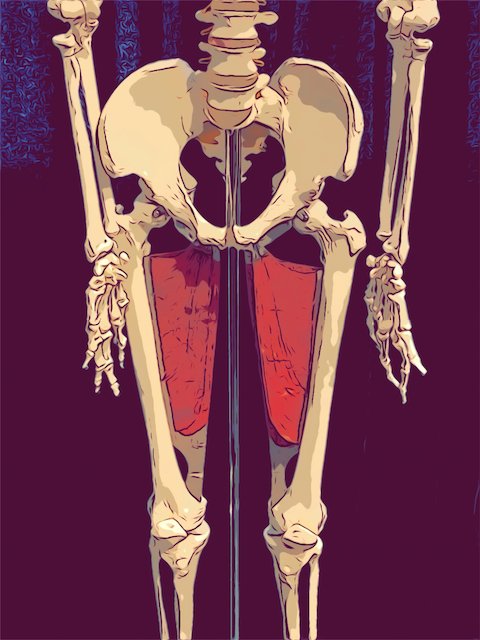
When you think about it, all leg movement boils down to flexing, extending, rotating, adducting, and abducting the femur. There are FIVE LEG MUSCLES in our group of 12 that do this: the Psoas Major; the Glutei Maximi; the Hamstrings; the Adductors; and the Quadriceps Femoris. Each have their own job, however, we will never think about these muscles separately. They work together, like an ensemble, to dance the femur.
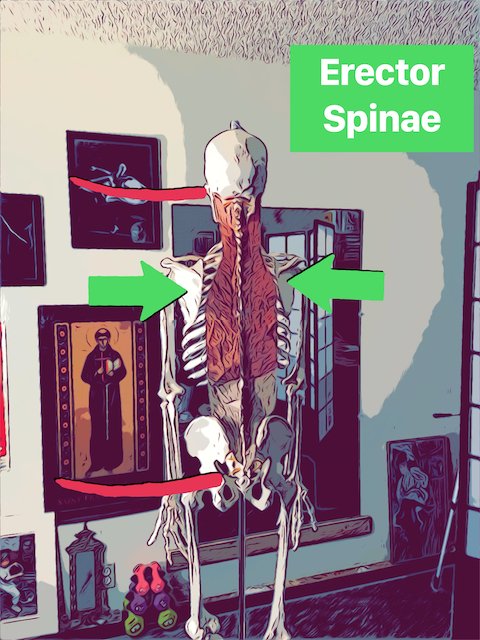
In THE ERECTOR SPINAE REVISITED, I talk about muscle origination and insertion of the Erector Spinae. Knowledge about exactly where these muscles are located will improve our technique.
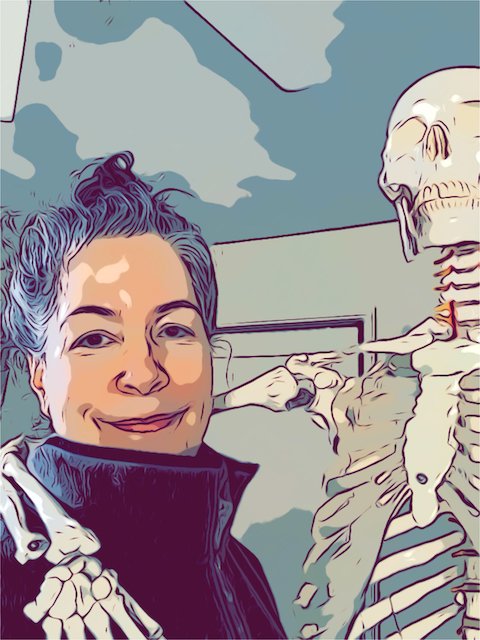
Every bone and muscle identified by Literal Technique brings us one step closer to what I call FUSION. Now that I’ve laid out it all out, I am excited to tell you that our final step is a step inside the fusion body. This step is the beginning of the end of the two gaps I identified in my first installment: the inevitable technique gap created when training in professional studios and the gap between the dancer and the body learned in conventional training.
A note to the Third Shift:
As I developed my ideas, I looked at numerous online and hard copy anatomy sources. Because the location and the shape of the 12 muscles varied slightly by source, I integrated the information into a final muscle drawing that reasonably represents each muscle. In general, regardless of the possible discrepancies, I believe that the drawings provide a meaningful teaching tool. I bear sole responsibility for any conflicts.
A note about anatomy: I am not an anatomy expert, a physical therapist, a medical doctor, or any trained specialist along any medical continuum. I am a dancer with working knowledge of how the body moves; my discussions of the muscles and the bones come from this base of knowledge and my own analysis of technique and how to teach technique. Although I have done enough research to accurately talk about what the 12 muscles and the bones do, my discussion and understanding of the body is as a dancer. Please consult with a medical professional if you have any medical or anatomical condition that impacts your mobility and/or requires the kind of expertise than I am not qualified to provide.