
Welcome to the Third Shift Movement Shop, home of Literal Technique, where we work so we can move. And welcome to the first installment of The Central Geekdom of Dance Technique, “Literal Technique: Learn, Re-Learn, and Repair.”
Choosing to dance is not for the faint of heart. Dancing is incredibly hard work and, for most dancers, it’s a second full-time job. The professional dance community is diffuse and diverse – many dancers aspire to dance in New York, but dancers are everywhere, working to dance. Dancing comes with very few material rewards and, for most dancers, a life of anonymity: most people will never know who we are or understand what we do (including, sometimes, our own families). As artists, we are often minimized or overlooked. Even still, we know that we are called to dance.
When I developed Literal Technique, I had in mind every professional dancer in every dance community all over the world, taking class, rehearsing together, choreographing, and performing (often for no pay) in anything they can, just so they can dance. They may have trained in, but they are not enrolled in, a college or conservatory program; maybe they came up through a company school. I was thinking about the dancers who move to a city to find work as a dancer and train in professional studios. I am one of these dancers.
I danced professionally for about 10 years and, although it’s hard to estimate, I don’t think it’s a stretch to say that I’ve probably taken class from close to 50 teachers, modern, ballet, and jazz combined. This is, after all, what we do to train, and the more, the better. What I found, though, is that studio training inevitably creates gaps in any dancer’s technique. I also began to believe that the way technique is taught, in general, creates a gap between the dancer and the body.
I will talk more about these gaps in the next installments, but, for now, suffice it to say that these observations motivated me to create Literal Technique. After watching professional dancers, myself included, take class in professional studios and repeat the same technical mistakes, year after year, I went into the studio and started giving myself class. I thought about how, most of the time, class revolves around repeating what the teacher did, plus trial, error, metaphor, and repetition. I looked at the technique I had. What did I need to learn to become a better dancer? If I could change technical training for trained dancers, how would I do it?
Technique is about being able to control the form the body takes, so we can say what we want to say.
Over a period of many years, I created what I call, Literal Technique, a technique that uses the literal body to train the body. It is based on the belief that understanding the body, literally, is crucial to learning, re-learning, and repairing technique. Its primary goals are not only to attempt to close the technique gap, but also to address the gap between the dancer and the body.
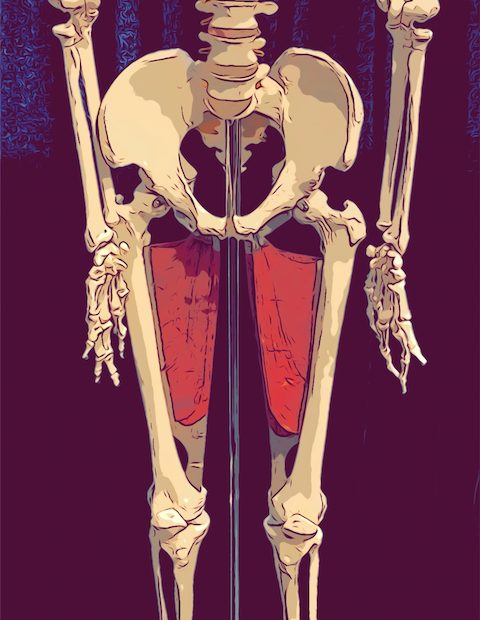
Literal Technique is geeky. It is analytical. It is not filled with sublime imagery and metaphor. I’ve gone straight to the source of movement – the body – in all its geeky glory. I focus on 12 muscles and the bones to which they attach; these are the foundation for a technique that develops what I call a “fusion body.” Literal Technique directly answers the questions I had, and that I think other dancers have, about how to move the body.
Technique is about being able to control the form the body takes, so we can say what we want to say. If you believe that your technical ability is holding you back as an artist, if you want to dig deeper into how to move, or if you want to think differently, then learn about the geeky glory of the body through Literal Technique.
So, welcome to the Third Shift Movement Shop, where I teach Literal Technique. And welcome to the Central Geekdom of Dance Technique, where I write about Literal Technique. Next installment: my ideas about the Technique Gap.
Photo credit: Jill Redfern
You can send comments and questions to Jill at info@thirdshiftmovementshop.com. Please subscribe to the Third Shift’s YouTube channel and follow the Third Shift on Facebook.