
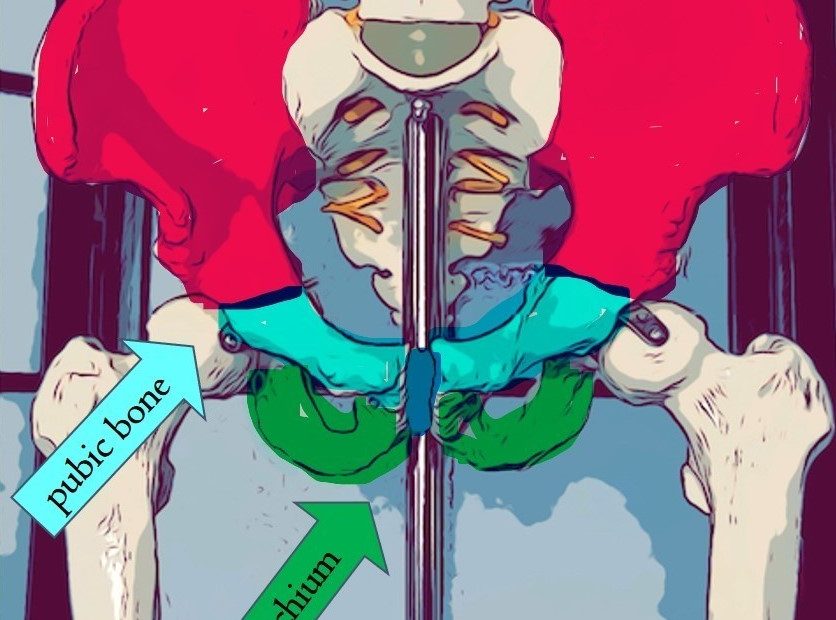
This tutorial is about alignment of the pelvic barrel.
The pelvic barrel is a 360° sacrum-ilium-ischium-pubic-bone barrel.
Movement of the pelvic barrel happens at its connection to the 33 vertebrae at the sacral vertebrae (the sacrum). When we move the sacrum, the pelvic barrel moves.
Movement of the pelvic barrel happens at its connection to the 33 vertebrae at the lumbar vertebrae by way of the lumbosacral joint. When we move the lumbar vertebrae, the pelvic barrel moves.
The meeting point of the fifth lumbar vertebra, L5, and the first sacral vertebra, S1, forms the lumbosacral joint, which connects the lumbar vertebrae to the sacrum. Most movement of the lumbar vertebrae happens at this joint, and most of this movement is flexion and extension, with minimal lateral flexion and no rotation. When the lumbar vertebrae flex, the sacrum and tailbone extend (curve under). When the lumbar vertebrae extend, the sacrum and tailbone flex (tilt up). Thus, when we move the sacral and the lumbar vertebrae, the pelvic barrel moves.
The pelvic barrel derives its alignment from the 33 vertebrae. All movement of the pelvic barrel begins at the 33 vertebrae.
For now, think of these tutorials as supplements to what you are doing in your daily class. Try applying Literal Technique’s concepts to your technique while you perform familiar warm-up exercises. As usual, we will rely on our anatomy. For your reference, before, during, or after this tutorial, my Substack newsletters about the Geeky Glory of the central bones are linked below.